




President's Corner
Mike Nussman

Mike Nussman
ASA President and CEO

With ICAST just weeks away, I want to share with you my perspective on how the show and the state of the industry are shaping up. Given the ongoing economic challenges still facing our nation and the Gulf of Mexico oil disaster, I fully understand that you may have questions about what to expect when we meet in July at the Las Vegas Convention Center.

ICAST is the world’s largest and most important sportfishing industry event. For over 50 years, ICAST has been the sportfishing industry’s business hub, serving as the catalyst to meet the needs of anglers worldwide. This means delivering a show built on quality of attendance as much as quantity. I’m happy to report that booth sales and registration are tracking ahead of last year at this time. We are very excited about the way the show is coming together. Our ICAST team is pushing hard in every aspect of the show planning to make sure every ICAST exhibitor and attendee has the best experience possible in 2010. ICAST 2009, held in Orlando for the first time in 10 years, was rated an outstanding success by exhibitors and attendees alike. Our goal is to ensure 2010 is even better. My thanks go to ASA’s exhibitors, and all our members, for your investment in and support of the industry and the American Sportfishing Association.

At the same time, it’s safe to say that every business and industry continues to feel the effects of the toughest economic recession since the Great Depression. For our friends and colleagues in the Gulf region, the oil catastrophe is having a devastating impact in a region still recovering from the financial impacts of Hurricanes Katrina, Rita, Ike and Gustav. The impact on Gulf businesses is being felt nationwide by the manufacturers and distributors who supply products to bait and tackle shops, marinas and other recreational fishing-dependent businesses. Some of these family-owned businesses along with their employees are now facing the tragic reality that without sufficient emergency financial assistance, the loss of revenue due to the oil leak will force them to go out of business by the Fourth of July.

While the longer term impacts of the oil on water quality and sportfish species remain uncertain and must be addressed, we maintain that businesses should not be forced to close prematurely due to this unprecedented disaster and we’ve asked President Obama to provide immediate financial assistance. The industry’s thanks go to Senators Bill Nelson (D-FL) and Richard Shelby (R-AL) and all the Members of the Senate for their actions to acknowledge and provide financial support to businesses in the Gulf region. ASA urges the House of Representatives to follow suit and ensure that recreational fishing-dependent businesses are included in its 2010 Supplemental Appropriations bill.

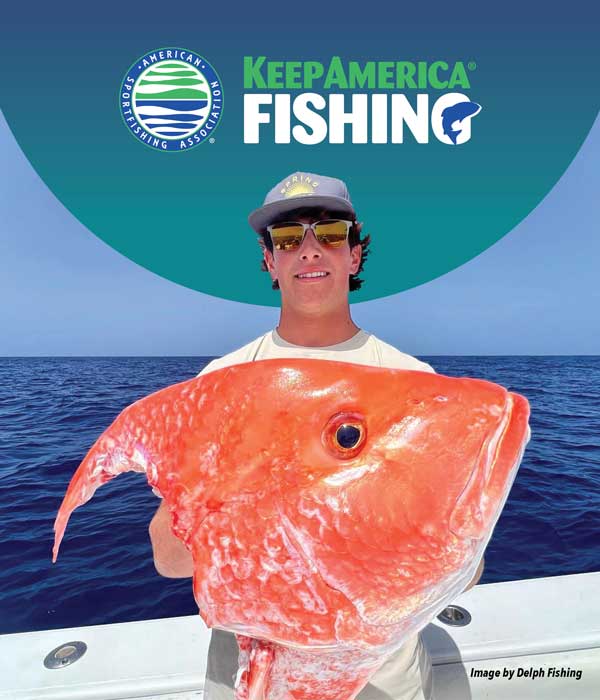
And the issues don’t end in the Gulf of Mexico. In the South Atlantic, since January, anglers—and the businesses they support—have been living under a red snapper fishing ban. This week, the South Atlantic Fishery Management Council voted to expand that ban to include all bottom fishing in a 5,000 square mile area off the coasts of Florida and Georgia effective January 2011. A new red snapper stock assessment is due to be presented to the council in December. Why not wait for the results of that study before taking such extreme and potentially economically devastating action? We know the red snapper fishery in this region needs rebuilding and anglers and the sportfishing industry want the healthiest possible fishery. The council should have waited until it had the most up-to-date and accurate data possible, including socio-economic impacts, before it made its decision. Without good data, responsible fisheries management simply isn’t possible. Frankly, this isn’t fisheries management at all; it’s crisis management. This situation needs to be fixed; it needs to be fixed fast; and it needs to be fixed legislatively. On June 9, the sportfishing community, in partnership with the Congressional Sportsmen’s Foundation, held a briefing for Members of Congress and their staffs to outline the need for better data and the immediate need to amend the Magnuson-Stevens Act to bring commonsense to our marine fisheries management.

The nature of our business is becoming increasingly complex. From the Industry Breakfast to the business seminars to the ARC Resource Center, you’ll have many opportunities to learn more about the issues facing our industry and what we’re doing to address them while at ICAST 2010.

I look forward to seeing you next month in Las Vegas!

Mike Nussman
President & CEO