



Currents

News briefs on sportfishing issues and trends affecting the marketplace

Bill Introduced to Amend Clean Water Act

On April 21, Representative Jim Oberstar (D-MN) introduced legislation in the U.S. House of Representatives that would attempt to restore the interpretation of the scope of waters protected in the Clean Water Act that was narrowed by Supreme Court decisions in 2001 and 2006. The bill, H.R. 5088, would remove the word “navigable” from the Clean Water Act and replace it with “waters of the United States,” which follows the definition the EPA and the U.S. Army Corps of Engineers used for decades prior to the recent Supreme Court decisions.

No Asian Carp Found in Sampling Along Chicago-Area River

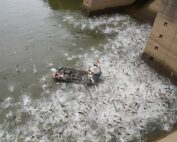
A recent operation to poison a 2.5-mile stretch of Chicago’s Little Calumet River yielded no Asian carp among the 100,000 pounds of fish carcasses they have collected. The application of the fish poison rotenone was part of a $78.5 million federal framework aimed at gauging the spread of the invasive fish and preventing them from reaching the Great Lakes. Previous DNA tests have detected the presence of Asian carp in the Great Lakes, though no actual fish have been found to date. On March 22, 2010, the U.S. Supreme Court denied for the second time a request by the state of Michigan to temporarily close locks and gates on the Chicago canal to block the spread of invasive Asian carp into the Great Lakes.

On June 4, as part of a three-year study into the Great Lakes states’ and federal government’s handing of the Asian carp crisis, the U.S. Army Corp of Engineers recently rejected closing Chicago-area shipping locks on a regular basis, claiming that doing so would not have a high probability of reducing the risk of Asian carp establishing a self-sustaining population in Lake Michigan. The Corp also said that anything short of permanently closing the locks was unlikely to protect the Great Lakes from Asian carp.

ASMFC Expands Recreational Black Sea Bass Season

The Atlantic States Marine Fisheries Commission’s (ASMFC) Summer Flounder, Scup and Black Sea Bass Management Board recently voted to modify the 2010 season length for the black sea bass recreational fishery. The vote, passed unanimously, will allow states to extend the 2010 black sea bass season in state waters by an additional 90 days. The proposed new season will run from May 22 to October 11, 2010 and from November 1 to December 31, 2010. The increase in fishing days comes as a result of the recent release of 2009 black sea bass landings, which showed lower landings than were projected.

Legislation Introduced to Authorize U.S. Fish and Wildlife Service Coastal Program

On May 18, Senator Benjamin Cardin (D-MD) introduced a bill, S. 3382, to authorize the Coastal Program of the U.S. Fish and Wildlife Service. The bill would codify the existing program, which would continue to work with willing partners and provide support to efforts to assess, protect, restore, and enhance important coastal areas that provide fish and wildlife habitat. A companion bill in the House, H.R. 5344, was introduced on May 19 by Representative Frank Kratovil (D-MD.)

NOAA Adds Three Northwest Rockfish to Endangered Species List

The National Oceanic and Atmospheric Administration’s (NOAA) National Marine Fisheries Service (NMFS) recently announced that three species of Pacific Northwest rockfish have been added to the Endangered Species List. The new listings will designate “threatened” status for canary and yelloweye rockfish, and an “endangered” listing for bocaccio, in the federal waters of the Georgia Basin district, which encompasses Puget Sound and the Strait of Georgia. Rockfish fishing is already prohibited within Washington state waters of Puget Sound proper.

United Nations Rejects Proposed Ban on Atlantic Bluefin Tuna

The Convention on International Trade in Endangered Species (CITES) did not accept a proposal to list Atlantic bluefin tuna under Appendix I, which would ban international trade of the species. The proposal, sponsored by the Principality of Monaco, and supported by the United States, garnered intense debate due to the importance of this migratory fish species for commercial purposes. It was rejected by a 20 to 68 margin, with 30 abstentions. Atlantic bluefin tuna stocks are estimated to have fallen by approximately 85 percent since the industrial fishing era began.

U.S. Dept. of Interior Provides $109 Million for Fish Passage and Irrigation Project

Work has begun on California’s Red Bluff Diversion Dam Fish Passage Improvement Project, which is part of the nation’s largest Department of the Interior project under the American Recovery and Reinvestment Act. The Department of Interior has committed $109 million in federal funds to a $220 million project that will decrease barriers to salmon, sturgeon and other migratory fish species at the Red Bluff Diversion Dam. State water bonds account for the remaining funds. The dam as currently constructed lowers and raises gates to divert water from the Sacramento River for the region’s farmers. The new project will replace the gates with a series of fish screens and a pumping facility for irrigation, and is expected to be completed in 2012.

Utah Passes Bill to Restrict Public Access to Streams and Rivers

On March 31, Utah Governor Gary Hubert signed into law HB 141, which places a moratorium on all land access to and on rivers and streams crossing private land, effective May 11, 2010. The new law changes the recreational easement recognized in a Utah Supreme Court 2008 decision that allowed the public to walk on the private bed of a public waterbody. The public will still be allowed to float on the surface of the water over private property that is closed to trespassing, but is not allowed to walk on the private bed of a public waterbody. On the same day, Governor Hubert also signed into law SB 281, which creates a legislative task force to develop a report and recommendations on public rights on public waters within the coming year.

Bonefish and Tarpon Fisheries Reopened

The temporary closure of recreational harvest of bonefish and tarpon in Florida waters ended on April 1, 2010. The Florida Fish and Wildlife Conservation Commission issued an executive order in January 2010 that established statewide closed seasons for bonefish and tarpon until April 1 as a precautionary measure due to the prolonged cold weather in Florida this winter. The minimum size limit for bonefish is 18 inches total length, and anglers may take one bonefish daily. The state’s ban on harvest for snook still applies through September 2010.

Alaska to Ban Use of Felt-Soled Waders

The Alaska Board of Fisheries has adopted a statewide phase-out of felt sole wading products, effective January 1, 2012. The move is aimed at guarding against the spread of aquatic invasive species, which may attach to felt soles and be accidentally transported across water bodies. Alaska is the first state to ban felt sole wading boots.

Felt Sole Wader Ban Proposed in Maryland

Based on scientific advice from the Maryland Department of Natural Resources (DNR) Invasive Species Matrix Team, the DNR is proposing a regulation to ban the use of felt-soled boots and waders in Maryland waters. The proposed ban on felt soles was introduced at a May 17 public scoping meeting in Annapolis, to help prevent further spread of invasive microorganisms that may damage water quality and impair fishing and boating opportunities, such as didymosphenia geminata, commonly known as didymo, and whirling disease. The DNR will seek comment and input on the proposal over the summer. The next public scoping meeting will occur in September 2010 prior to the submission of the felt-sole ban regulation.

NOAA Announces Plans to Reform Enforcement Program

On March 18, National Oceanic and Atmospheric Administration (NOAA) Administrator Dr. Jane Lubchenco outlined several steps the agency has taken and will take in an effort to improve the agency’s law enforcement program, in response to a January 2010 review of the program by the Commerce Department Inspector General, which identified numerous flaws in the system. Among the steps NOAA plans to take include requiring a “high-level” review of fines assessed against commercial anglers, and freezing the hiring of criminal investigators until an analysis of the appropriate mix of criminal and civil enforcement officers is complete. NOAA’s law enforcement program is made up of more than 200 agents and attorneys responsible for ensuring compliance with numerous marine resources statutes.

Anglers Push for Better Water Management at Salmon Summit

Recreational and commercial anglers, seafood businesses, and elected officials recently joined together for a “Salmon Summit” to call for better management of water to rebuild strong salmon runs in the Sacramento-San Joaquin Delta. Specifically, participants urged members of Congress to support the National Marine Fisheries Service (NMFS) salmon plan released in June 2009 and other federal and state wide plans that require adequate flows in the Bay-Delta.

The meeting, held in San Francisco, was hosted by U.S. Representatives George Miller (D-CA), Mike Thompson (D-CA) and other elected officials. The recent statewide drought and water exports for farming irrigation have led to record low returns of adult Sacramento River king salmon from the Bay-Delta in the last three years. The collapse of the salmon industry has collectively cost California and Oregon 23,000 jobs and more than $2 billion per year in lost revenue, according to an economic study by Southwick and Associates.