



Policy Watch

These items cover Government Affairs activities for January and February 2010. For more information on ASA’s Government Affairs activities, contact Gordon Robertson, vice president and Government Affairs lead, x237, Patty Doerr, director, Ocean Resource Policy, x244, or Mike Leonard, Policy fellow, x230. Please visit ASA’s Web site for more information.

Community Calls for Major Marine Fisheries Management Changes

A coalition of marine recreational fishing, boating, and conservation organizations and businesses have called on the Obama administration to take immediate action to address a crisis within the federal fisheries management system. In a February 24 letter to National Oceanic and Atmospheric Administration (NOAA) Administrator Dr. Jane Lubchenco, the American Sportfishing Association, The Billfish Foundation, the Center for Coastal Conservation, the Coastal Conservation Association, the International Game Fish Association, and the National Marine Manufacturers Association laid out an initial framework to immediately address serious and escalating problems resulting from inadequate implementation of the Magnuson-Stevens Fishery Conservation and Management Act and the chronic problems that exist within the federal marine fisheries management system. The coalition emphasizes that there are available administrative actions that can be taken immediately to address the concerns of the sportfishing and boating industries and the nation’s 13 million saltwater anglers who depend on well managed, healthy marine fisheries. Read the full letter sent to Dr. Lubchenco here.

Marine Spatial Planning Interim Framework Comments Submitted

ASA, along with nine other partner recreational fishing and boating organizations, submitted joint comments on the White House Interagency Ocean Policy Task Force’s Interim Framework for Effective Coastal and Marine Spatial Planning. The coalition stressed that the national ocean policy acknowledge the economic, conservation and social contributions of recreational fishing and boating by encouraging and promoting recreational activities in marine and freshwater environments. The coalition expressed its support for increasing coordination among the federal and state agencies that manage or regulate the oceans and coasts, but also expressed concerns about creating new bureaucracies that would impose top-down regulations, which would impinge on state agencies which have primary jurisdiction for resident fish and wildlife. ASA and other representatives of the recreational fishing community met with the Council on Environmental Quality, which chairs the Ocean Policy Task Force, to further discuss these concerns. The Interim Framework follows on the task force’s first document which drafted a national policy and implementation strategy for conserving and managing the oceans, the Great Lakes, and the coasts of the United States.

NOAA Appoints New Assistant Administrator for Fisheries Service

The National Oceanic and Atmospheric Administration (NOAA) announced the appointment of Eric Schwaab as NOAA’s Assistant Administrator for Fisheries. In this position, Schwaab will oversee management and conservation of marine fisheries and marine mammals, sea turtles and coastal fisheries habitat within the U.S. economic zone. Schwaab most recently served as Deputy Secretary for the Maryland Department of Natural Resources. ASA looks forward to working with Schwaab in his new role to improve the focus and recognition of recreational fishing within NOAA’s National Marine Fisheries Service.

Voice Your Opposition to a Premature Ocean Policy Executive Order

Despite the complexity of establishing a national ocean policy and no final recommendations document, pressure is being placed on the President to use an executive order to establish sweeping ocean management polices. An executive order would bypass the oversight process, including Congressional review. To send a letter to President Obama, Members of Congress, the head of the National Oceanic and Atmospheric Administration and the Chair of the Ocean Policy Task Force click here or visit www.keepamericafishing.org urging them to follow appropriate Congressional review and oversight before a new ocean policy is put in place that would affect recreational fishing and boating along the nation’s coasts, in the ocean and the Great Lakes. Please act now to protect fresh and saltwater recreational fishing opportunities.

NOAA Launches National Saltwater Angler Registry

On January 1, 2010, the National Oceanic and Atmospheric Administration (NOAA) launched the National Saltwater Angler Registry. The 2006 Reauthorization of the Magnuson-Stevens Fishery Conservation and Management Act (MSA) included a provision establishing a federal registry of saltwater anglers in order to improve recreational saltwater fishing data collection. The registry’s predecessor, the Marine Recreational Fisheries Statistics Survey, randomly sampled coastal residents about their saltwater fishing efforts. The new national angler registry is intended to target only those people that have identified themselves as saltwater anglers.

Anglers who are required to register either hold a license from one of 10 coastal states or territories which do not currently have comprehensive saltwater angler license or registration requirements—Hawaii, Maine, Maryland, Massachusetts, New Jersey, New Hampshire, Puerto Rico, Rhode Island, Virginia and the U.S. Virgin Islands; fish for or are likely to catch fish that live in the ocean but spawn in fresh water; or fish in the federal waters more than three miles from the ocean shore. To view registration guidelines and requirements and to register, go to http://www.countmyfish.noaa.gov and click on the Register link, or call the toll-free registration line at 1-888-MRIP-411 (1-888-674-7411) from 4:00 a.m. to midnight, EST, daily.

Update on National Park Service Proposed Lead Ban

On January 27, ASA and representatives from the shooting sports community met with Assistant Secretary for Fish and Wildlife and Parks Tom Strickland along with Department of Interior and National Park Service (NPS) staff to discuss the NPS’ intention to ban fishing tackle with lead components in national parks. Strickland confirmed the ban only pertains to NPS operations and that any regulations that would extend to the public must follow the appropriate rulemaking process. ASA has stressed that any change in federal policy that would affect the sportfishing industry needs to follow appropriate rulemaking guidelines, including evaluating relevant science and an open public process.

California Marine Life Protection Act Planning Update

Despite urging from the recreational fishing and boating community to treat each marine protected area proposal for Southern California equally, during its March 2010 meeting, the California Fish and Game Commission (FGC) passed a motion favoring the Blue Ribbon Task Force’s integrated preferred alternative (IPA) as part of the South Coast region’s Marine Life Protection Act (MLPA) implementation process. In a three to two vote, the commission instructed the Department of Fish and Game to proceed with the regulatory and California Environmental Quality Act (CEQA) process for all four proposals, but only the IPA would be included in the Department’s Initial Statement of Reasons for review at the April 2010 FGC meeting in Monterey. In its continuing efforts to represent recreational anglers and boaters, the Partnership for Sustainable Oceans (PSO) called upon the commission to put the MLPA process in Southern California back on “even footing,” demanding that all proposals be given fair and equal consideration by the commission as clearly stated during the December 9, 2009, commission meeting. The PSO reaffirms its position to remain actively and constructively engaged in the MLPA process. The goal is to ensure that the eventual outcome is based upon the best available, unbiased science and sound public policy.

Proposed Lead Fishing Tackle Ban in Washington State Update

During its February 4–6, 2010, meeting in Olympia, Wash., the Washington Fish and Wildlife Commission (WFWC) decided not to adopt a ban on the use of small lead fishing tackle at 13 lakes in Washington. The commission agreed to schedule additional public input during the next several months on this and another proposal before acting on any proposed changes. ASA had previously submitted written comment and spoke at the December WFWC meeting in opposition to the ban.

Oregon Marine Reserves Update

ASA and its Oregon representative continue to work with Oregon Department of Fish and Wildlife officials, state legislators and angler groups to refine Oregon’s process for establishing marine reserves. In a recent visit to Oregon, ASA staff met with legislators, agency staff and angler groups to discuss the economic contributions of sportfishing, including job retention; the progress of community groups in Oregon in their deliberations on study areas; and how to ensure a transparent funding and implementation process. Community groups for each study area began meeting in January 2010. Industry interests were represented at these meetings.

Send a Letter to Support the National Fish Habitat Conservation Act

ASA continues to work with other members of the National Fish Habitat Conservation Act (NFHCA) legislative team to advocate with Members of Congress for their support of the bill and to seek additional sponsorship. In January, four additional House members signed on to the bill, bringing the total number of co-sponsors to twelve. To ensure this bill is passed, please send a letter to your House of Representatives member today asking for him or her to support the NFHCA. Additional co-sponsors are needed for this bill to succeed. For more information, visit ASAfishing.org. The foundation for the NFHCA is the National Fish Habitat Action Plan (NFHAP). ASA Vice President Gordon Robertson sits on the NFHAP Board.

Federal Marine Fisheries Advisory Committee Holds Meeting

The Marine Fisheries Advisory Committee (MAFAC), a federal committee that advises the Secretary of Commerce on marine resource issues met in February in Hawaii. The agenda included discussions on the National Oceanic and Atmospheric Administration’s (NOAA) Draft Catch Share Policy; updates on NOAA’s proposed 2011 budget; and recommendations for nominees to the Recreational Fishing Working Group. The next meeting will be held June 29-July 1, 2010. ASA Ocean Resource Policy Director Patty Doerr attended the February 23-25 meeting.

California Commission Asks Schwarzenegger to Exempt Game Wardens

In January, the California Fish and Game Commission (FGC) sent a letter urging California Gov. Arnold Schwarzenegger to exempt the state’s game wardens from furloughs, which require game wardens to take three unpaid furlough days per month. California already has the fewest game wardens per capita, making the enforcement of current regulations difficult. In the letter, FGC President Jim Kellogg and Commissioner Dan Richards stated that they are prepared to delay new regulations, including those established under the state’s Marine Life Protection Act (MLPA), because wardens would not be able to enforce new mandates.

Wallop-Breaux Reauthorization Update

The Angling and Boating Alliance, the ad hoc group comprised of ASA and other key angling and boating groups, continues to promote reauthorization of the Sport Fish Restoration and Boating Trust Fund (Wallop-Breaux). In January, the Alliance worked to finalize drafting bill text to reflect the group’s coordinated agreement on funding allocation changes. Wallop-Breaux must be reauthorized as part of the Federal Highway Trust Fund (FHTF) in order to capture the revenue from that part of the federal fuel tax attributable to motor boat and small engine use. The FHTF, set to run out in September 2009, has been kept alive through a series of five extensions.

ASA Comments on Chesapeake Bay Restoration Strategy

In January, ASA provided comment on the Federal Leadership Committee for the Chesapeake Bay’s (FLC) Draft Strategy for Protecting and Restoring the Chesapeake Bay. ASA’s comments focused on a recommendation that the National Oceanic and Atmospheric Administration (NOAA) explore the viability of establishing marine protected areas (MPAs) within the Chesapeake Bay. Rather than place restrictions on recreational fishing, ASA is asking the FLC and NOAA to promote recreational fishing since sportfish populations in the Bay are healthy. ASA’s position is that MPAs would do nothing to mitigate excess nitrogen and phosphorous pollution, the leading threat to the overall health of the Bay. The Draft Strategy was produced in response to President Obama’s May 12, 2009, Executive Order on Chesapeake Bay Protection and Restoration, and is the first step in the creation of a new strategy for restoring and protecting the Chesapeake Bay and waterways in the region.

TRCP Marine Conservation Working Group Meets

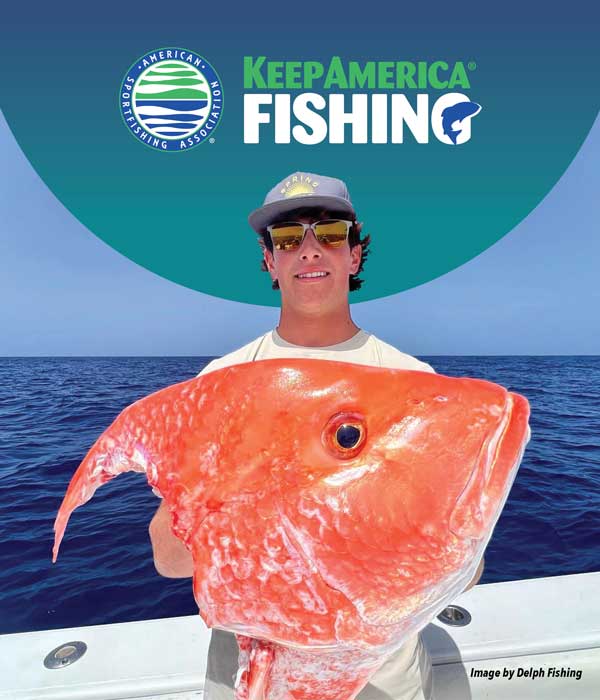
In January, ASA attended the Theodore Roosevelt Conservation Partnership (TRCP) Marine Conservation Working Group meeting. The group discussed recent marine fisheries issues, including the Interagency Ocean Policy Task Force’s Marine Spatial Planning Report, NOAA’s Catch Share Guidelines and the January 2010 Atlantic red snapper closure in the South Atlantic. The working group’s goal is to improve fisheries management in general and specifically for the benefit of saltwater recreational anglers.

House Moves Pricing Bill Out of Committee

The House Judiciary Committee approved a bill that reverses a Supreme Court decision upholding manufacturers’ rights to set minimum prices below which their dealers cannot sell a product. The Discount Pricing Consumer Protection Act of 2009, H.R. 3190, was introduced by Rep. Henry Johnson (D-GA). The Senate companion bill, S. 148, sponsored by Sen. Herb Kohl (D-WI), has yet to see action. The bills would effectively ban manufacturers from dictating minimum prices to dealers as a violation of the anti-trust provisions of the Sherman Act. These agreements are illegal in most states, despite a 2007 Supreme Court ruling (the Leegin ruling) that determined they did not violate federal anti-trust laws in certain circumstances.