





Currents

News briefs on sportfishing issues and trends affecting the marketplace

USDA Launches Coral Reef Conservation Initiative

The U.S. Department of Agriculture (USDA) recently launched an initiative to conserve coral reefs. The Environmental Quality Incentives Program, which the USDA’s Natural Resources Conservation Service (NRCS) administers, will protect coastal and stream water quality, improve wildlife habitat and enhance near-shore coastal and coral reef health through land-based management.

In fiscal year 2010, the program will provide $1 million for a pilot project in Southwest Puerto Rico’s Guánica Bay watershed that will reduce sediment and nutrient runoff to help protect near-shore coral reef ecosystems.

The NRCS is planning to fund similar projects in Florida, the U.S. Virgin Islands, Hawaii and the Pacific Islands.

Pocketknives Protected in Homeland Security Appropriations Amendment

On Oct. 28, President Barack Obama signed the FY 2010 Department of Homeland Security Appropriations Act, which includes an amendment to protect the use of pocketknives.

The amendment, inserted into the bill in July by Senators John Cornyn (R-Texas), Mark Pryor (D-Ark) and Orrin Hatch (R-Utah), blocked the Office of Customs and Border Patrol’s attempt to alter its interpretation of the definition of switchblade knives to include spring-assisted or one-handed-opening knives.

Without the amendment, approximately 80 percent of the pocketknives commonly used for recreational and professional purposes in the United States would have been reclassified as illegal switchblades.

Atlantic Striped Bass Stock Not Overfished

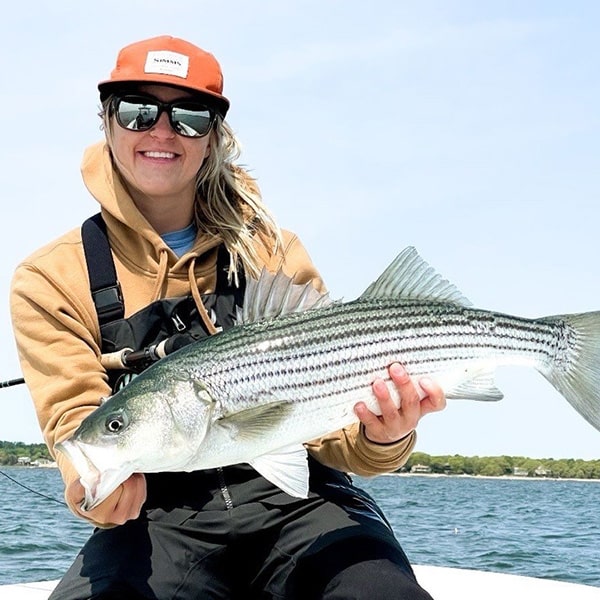
The Atlantic States Marine Fisheries Commission’s 2009 Atlantic striped bass stock assessment determined that the resource is not overfished.

According to the assessment, female spawning stock biomass remained greater than both target and threshold levels, and estimated fishing mortality rates in 2008 were less than the target and threshold rates. The assessment provided stock status for the combination of the three primary striped bass stocks: the Hudson River, the Delaware River and the Chesapeake Bay and its tributaries.

Striped bass are one of the most popular recreational fishing species along the Atlantic coast, with more than 2.2 million striped bass landed in 2008.

In October 2007, former President George W. Bush signed an Executive Order giving striped bass and red drum federal gamefish status.

Focus Areas Selected for USDA Mississippi River Basin Initiative

On Nov. 23, 2009, the U.S. Department of Agriculture (USDA) announced that 41 watersheds in 12 states, known as focus areas, were selected to participate in a new initiative to improve water quality and the overall health of the Mississippi River basin.

The selected watersheds cover more than 42 million acres, which is more than five percent of the basin’s land area. Selections were based on the potential for managing nitrogen and phosphorus, which are associated with water quality problems in the basin, while maintaining agricultural productivity and benefiting fish and wildlife.

The Mississippi River Basin Healthy Watersheds Initiative (MRBI), announced on Sept. 24, 2009, will provide approximately $320 million in USDA financial assistance over the next four years for voluntary projects in priority watersheds within the basin’s watershed. For information about the MRBI, including eligibility requirements, visit USDA’s Web site.

Strategy Announced for Cleaning Up the Chesapeake Bay

The Obama administration recently announced a draft strategy for a coordinated federal effort to clean up the Chesapeake Bay. The draft plan contains a package of federal initiatives to restore clean water, conserve treasured places, protect fish and wildlife and adapt to the impacts of climate change.

To date most of the Chesapeake Bay’s restoration plans have been voluntary and coordinated by the six states in the bay’s watershed. To accelerate efforts and track progress, federal agencies are charged with meeting milestones every two years, leading to all activities needed to restore the Chesapeake Bay and its watersheds being in place by 2025.

Bill Introduced to Repeal New York’s Saltwater Fishing License

A bill, S6250, has been introduced in the New York State Senate that would repeal the state’s saltwater fishing license and replace the license with a free registry of anglers.

If the bill passes, New York’s saltwater anglers could have to pay for a federal registration, where license dollars would go to the federal government instead of the state, or the New York Department of Environmental Conservation could be forced to use funds from its general budget to implement a substitute registration program, thereby diverting funds from programs affecting game and inland waters.

The state’s current saltwater fishing license helps fund fisheries conservation and provides valuable recreational saltwater angler data.