


April 2010 American Sportfishing Association Policy Watch
Policy Watch is a monthly update for the sportfishing community about the American Sportfishing Association’s Government Affairs activities.
For more information on ASA Government Affairs activities, contact Gordon Robertson, vice president and Government Affairs lead, 703.519.9691, x237, Patty Doerr, Ocean Resource Policy director, x244, or Mike Leonard, Policy Fellow, x230.
Gulf of Mexico Fishing Restricted in Response to Oil Spill
Recreational Fishing in the Gulf of Mexico
NOAA Fisheries Holds Saltwater Recreational Fishing Summit
ASA Comments on South Atlantic Red Snapper Environmental Statement
ASA Government Affairs Committee Meeting
Urge the White House to Safeguard Recreational Fishing
California Marine Life Protection Act Planning Update
Support the National Fish Habitat Conservation Act
Cape Hatteras National Seashore Recreation Area Update
Beyond Season’s End Profiled at Congressional Briefing
Washington State Recreational Fishing Issues Update
Oregon Marine Reserves Update
ASA Supports Reauthorization of National Estuary Program
Senate Passes Tax Extenders in Jobs Bill
2010 Jim Range National Casting Call
Gulf of Mexico Fishing Restricted in Response to Oil Spill
On May 2, in response to the oil spill caused by the April 22 explosion of BP’s Deepwater Horizon oil rig in the Gulf of Mexico, the National Oceanic and Atmospheric Administration (NOAA) announced that recreational and commercial fishing will be restricted for a minimum of ten days in federal waters between Louisiana state waters at the mouth of the Mississippi River to waters off Florida’s Pensacola Bay. A map of the emergency rule closure boundary and information on how to submit claims to BP for loss and damage caused by the spill can be found at www.noaanews.noaa.gov/stories2010/20100502_fisheries.html.
More information about federal and state response can be found at:
Federal
State
Recreational Fishing in the Gulf of Mexico
In addition to the tragic loss of life, the oil spill and resulting fishing closure pose a severe threat to the Gulf of Mexico’s marine fishery resources and sportfishing industry, although ultimate impacts on recreational fisheries and wildlife are impossible to predict at this time. Recreational fishing contributes $41 billion dollars in economic output in the Gulf Coast region annually and supports over 300,000 jobs. The Gulf of Mexico is one of the most popular areas for recreational fishing in the United States with nearly six million saltwater anglers taking over 45 million fishing trips each year. The oil spill has the potential to impact the nearly 2,300 tackle shops in Texas, Louisiana, Alabama, Mississippi, and Florida’s West Coast.
NOAA Fisheries Holds Saltwater Recreational Fishing Summit
On April 16-17, the National Oceanic and Atmospheric Administration (NOAA) held the Saltwater Recreational Fishing Summit in Alexandria, Va., as a first step towards improving the relationship between the saltwater recreational fishing community and NOAA’s National Marine Fisheries Service. Approximately 170 individuals participated in the Summit, including Government Affairs Committee members and ASA staff. Attendees participated in breakout discussions to identify key issues facing recreational fishing and develop next steps to address the key issues. ASA President Mike Nussman, ASA Government Affairs Committee Chairman Bill Shedd (AFTCO), and ASA Government Affairs Committee member Jim Martin (Pure Fishing) each provided remarks during a panel discussion on next steps and accountability. Some of the key recommendations identified at the Summit include: establishing a well-staffed Office of Recreational Fishing within NOAA to provide for a more formal mechanism for coordination; improving data collection, including angler catch, economic and fish stock assessments; requiring a re-evaluation of allocations prior to implementing a commercial catch share system; and giving public access to public resources priority consideration in implementation of ocean policy.
ASA Comments on South Atlantic Red Snapper Environmental Statement
ASA recently submitted comments to the South Atlantic Fishery Management Council on the Draft Environmental Impact Statement (DEIS) for Snapper Grouper Amendment 17A, which proposes to prohibit the harvest of all snapper/grouper species in areas of the South Atlantic in addition to a total prohibition of red snapper harvest. In the letter, ASA stated its opposition to the proposed widespread groundfish closure, and expressed its serious concerns with the management of red snapper in the South Atlantic, including the lack of economic data on the impact of the on the recreational fishing industry.
ASA Government Affairs Committee Meeting
ASA’s annual spring Government Affairs Committee meeting was held April 14-15, in Alexandria, Va., just prior to the National Oceanic and Atmospheric Administration’s (NOAA) the Saltwater Recreational Fishing Summit. Committee members heard updates and status reports on a wide-range of topics including federal and state marine protected areas; the 2006 Magnuson-Stevens Fisheries Conservation and Management Act reauthorization challenges; revisions to ASA’s lead fishing tackle position paper; the Sport Fish Restoration and Boating Trust Fund reauthorization; invasive species; and the National Fish Habitat Conservation Act. The next Government Affairs Committee meeting will take place during ASA’s annual Sportfishing Summit, which will be held at the Westin Beach Resort in Fort Lauderdale, Fla., October 26-28, 2010.
Urge the White House to Safeguard Recreational Fishing
In the next few weeks, the Obama Administration is expected to issue a final report, and possibly other policy guidance, outlining the administration’s plans to manage the nation's oceans, coastal areas and the Great Lakes. The plan started with a presidential memo released in June 2009 that ordered the development of a national ocean policy through the Interagency Ocean Policy Task Force. The task force, led by the Chair of the Council on Environmental Quality, was charged with developing a national policy for conserving and managing the United States ocean territory and the Great Lakes. The White House is in the final stages of developing the final report. Go to www.keepamericafishing.org to send a letter to President Obama and other key policy makers urging the task force to recognize and promote recreational fishing and boating in the national policy.
California Marine Life Protection Act Planning Update
On April 6, the Partnership for Sustainable Oceans (PSO) sent a letter to the California Fish and Game Commission (FGC) calling upon the FGC to reverse its current direction and give fair and equal consideration to all four South Coast marine protected areas (MPAs) proposals as originally planned. At the March FGC, the FGC voted to only evaluate the Blue Ribbon Task Force’s Integrated Preferred Alternative (IPA) under the Administrative Procedures Act. The decision effectively removed the three stakeholder proposals from further consideration, thus violating promises made to the public. The PSO, which represents the recreational fishing and boating communities, supports Proposal 2 as the preferred alternative for the South Coast. Proposal 2 places MPAs in locations with a high level of conservation while minimizing the economic impact on local communities and recreational anglers and boaters. Please go to www.keepamericafishing.org/california.html to send a letter to the FGC urging them to support Proposal 2 and allow it to receive fair and equal consideration in the regulation process.
Support the National Fish Habitat Conservation Act
ASA continues to work with other members of the National Fish Habitat Conservation Act (NFHCA) legislative team to advocate with Members of Congress for their support of the bill and to seek additional sponsorship. To ensure this bill is passed, please send a letter to your House of Representatives member today asking for him or her to support the NFHCA. Additional co-sponsors are needed for this bill to succeed. In the Senate the bill is awaiting floor action. The NFHCA provides funding for crucial fisheries conservation and habitat restoration across the United States. The foundation for the NFHCA is the National Fish Habitat Action Plan.
Cape Hatteras National Seashore Recreation Area Update
On April 18, ASA staff and supporters of the Cape Hatteras recreational fishing community met with Jon Jarvis, director of the National Park Service, to discuss concerns with access restrictions to the Cape Hatteras National Seashore Recreational Area (CHNSRA). The U.S. Environmental Protection Agency recently published in the Federal Register the Draft Environmental Impact Statement (DEIS) for the CHNSRA Off-Road Vehicle Management Plan. The DEIS evaluates the impacts of several alternatives for regulations and procedures that would manage the park’s wildlife and provide reasonable access to the CHNSRA. To view the DEIS and for information on how to submit comments, due May 11, 2010, please go to www.preservebeachaccess.org/landingnew/deis.html. For more information, visit www.keepamericafishing.org.
Beyond Season’s End Profiled at Congressional Briefing
On April 20, ASA participated in a panel discussion as part of a Congressional briefing to review how global climate change might impact fish and wildlife and discuss the need for dedicated funding to enable adaptive management strategies for fish and wildlife. Also profiled at the event was Beyond Seasons’ End, a new report about game species’ adaptation to climate change and its effects on hunting and fishing. ASA provided information in the report on the forecasted impacts global warming will have on saltwater habitats and species. The report is funded by the Bipartisan Policy Center. More information can be found at www.beyondseasonsend.org.
Washington State Recreational Fishing Issues Update
In April, ASA staff visited with the Director of the Washington Department of Fish and Wildlife and staff to discuss that state’s implementation of marine spatial planning legislation and a proposal to limit use of lead fishing sinkers and jigs in 13 high mountain lakes. The recently passed legislation on marine spatial planning contains language that supports recreational fishing in Washington marine waters and discussions are just beginning on how the state will implement the measure. Further discussions on lead fishing sinkers with the industry and others will occur over the summer and a potential decision by the state’s Fish and Wildlife Commission will be made in late summer or early fall of this year.
Oregon Marine Reserves Update
ASA and its Oregon representative continue to work with the Oregon Department of Fish and Wildlife officials, state legislators and angler groups to refine Oregon’s process for establishing marine reserves. Community groups for the study areas are conducting meetings within their study areas. Industry interests are represented at these meetings. ASA recently traveled to Oregon and met with the recreational fishing representatives of one of the groups to discuss their progress. ASA staff also met with the coordinator of the process.
ASA Supports Reauthorization of the National Estuary Program
ASA recently sent a letter to the House Committee on Transportation and Infrastructure in support of HR 4715, the Clean Estuaries Act of 2010. The bill will reauthorize the Environmental Protection Agency’s National Estuary Program, which was created in 1987 to provide grants to improve the quality of estuaries of national importance. On April 18, the House passed the bill by a 278 to 128 margin, and the bill will move to on the Senate for its vote.
Senate Passes Tax Extenders in Jobs Bill
The U.S. Senate recently passed the American Workers, State, and Business Relief Act. The bill would extend many expired tax provisions for one year, retroactively to January 1, 2010, including the R&D tax credit, deferral for active financing and the look-through rules for controlled foreign corporations, and provide additional time for companies to make required pension payments. In addition, it broadens the tax credit for energy efficient installations and allows companies to use their unused Alternative Minimum Tax (AMT) credits based on hiring workers or making investments. The bill also would extend unemployment benefits and COBRA health insurance subsidies. The House, which passed its own version of the bill last December, and Senate must now begin the process of reconciling the two versions of the legislation.
2010 Jim Range National Casting Call
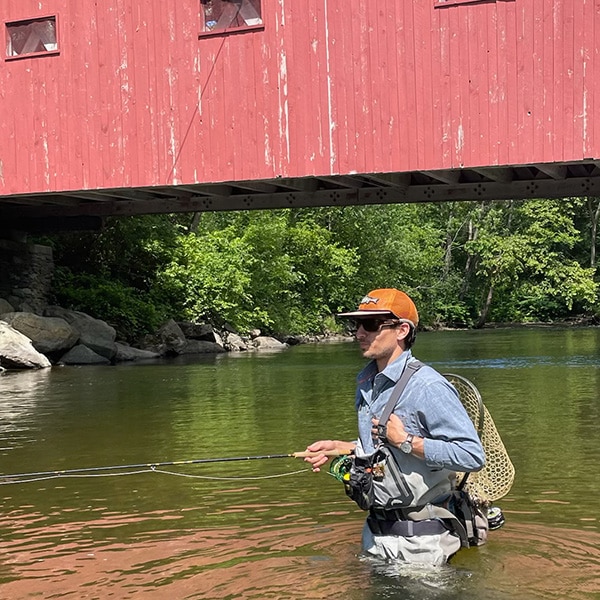
This year’s Jim Range National Casting Call was held April 22 at Fletcher’s Cove in Washington, D.C. Sponsored by the American Fly Fishing Trade Association, the event is held annually to providegovernment decision makers with the opportunity to fish for shad in the Potomac River and learn about the importance of collaborative fisheries conservation. At the event, a status report on the National Fish Habitat Action Plan (NFHAP) was given, the 2010 NFHAP awards were presented, and America’s Ten Waters to Watch were highlighted.