


ICAST 2005


Cindy Garrison, Host
Professional International Angler and Guide
ESPN TV Host—Get Wild! With Cindy Garrision
ICAST Industry Breakfast
July 20, 2005; 7:30 a.m.–8:45 a.m.
Las Vegas Convention Center

Cindy Garrison

Thank you, Dave. I want to thank all of you for inviting me to join you for ICAST. I’m delighted to be in the company of so many industry leaders during such an important event for the trade. And I’m truly honored that ASA considers my perspectives valuable in light of your efforts to make fishing more popular.

The first thing you might notice about me is I don’t look like the “normal fisherman.” And I’m taking a wild guess that I’ve had pretty different experiences building my career in the fishing business. But I certainly share your passion AND commitment to fishing.

At age 23 I dropped everything and moved to Alaska with only $80 in my pocket and a huge dream. That dream was to become a fly fishing guide. Not just any fly fishing guide, but a prominent figure in the fly fishing industry. And I knew in order to do that, I had to start at the bottom and work my way to the top.

Well, that I did, and boy was it a long and hard road to the top! My first week out at a lodge in Illiamna, instead of guiding, I was scrubbing toilets and making beds. Every day I wanted to quit, but I didn’t want to let go of my dream. With a bit of creativity, I finally landed a job as a guide and ended up staying in Alaska for six years.

At age 28 I took my first trip to Africa and immediately knew that Botswana was my new home. I was told of the illusive and ferocious Tiger Fish that no one had been able to catch on a fly and instantly was intrigued!

It took me four months to create a business plan, make a deal with the largest safari operators in Botswana, and found my business, Safari Anglers. From there, ESPN came over to fish Tigers with me and soon after asked me to co-host In Search of Fly Water. That was three years ago, and I have fished the world over twice since then.

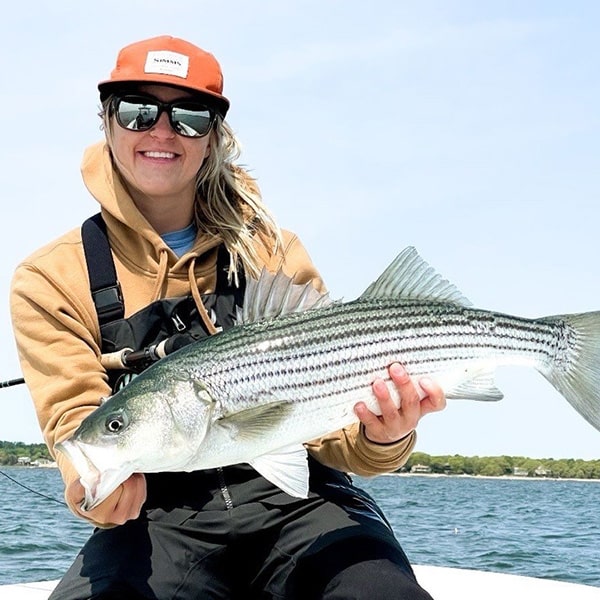
These days I host my own show on ESPN hoping to bring a little bit of my passion and love of the sport into homes all over the world. My addiction to fishing probably began in a similar way to many of you. In fact, my parents had me fishing when I was still in diapers.

I never saw my parents happier than when they were out on the river fishing. One of my favorite childhood memories is sitting on the boulders along the Klamath River when I was about 5, watching my Mom and Dad stalk trout with salmon flies. The way they snuck around the boulders hunting for fish made fishing look like a fun adventure. So, when I tried it myself, I was immediately hooked.

Every time my Dad caught even the tiniest fish he would yelp and whoop—it was great! So to all of you who can’t stand my whooping when I catch a fish on TV, blame it on my dad, it’s all his fault!

I think Mike made some compelling points about marketing family fishing. So many of us are living proof that the shared experience with our families brings the results we want: lifelong anglers who are enthusiastic about spreading the sport. That’s so key to our future.

I’m a firm believer that we all need to be ambassadors for the excitement and adventure of fishing—that’s what’s so contagious about it.

But I have to tell you, as a young woman, it was very difficult for a lot of people in the industry to believe that I felt the same passion that they did. Unfortunately, being different didn’t make them consider that I might have something new or special to offer.

I thought that becoming a guide in Alaska would give me the experience I needed to be a player in the industry and gain credibility. But instead, I was sabotaged at every turn. One time the other guides actually cut the gas lines in my boat motor, which sent me and my clients drifting out into Bristol Bay and a float plane actually had to rescue us! And then there were the betting pools about how long I would last. This went on for years!

Even now, with several years of experience under my belt, I still wonder what causes that kind of adversity. I’m sharing this with you because I think there are a lot of people like me who can be role models and bring new anglers to the sport if given a chance.

It was really only a handful of mentors who believed in me and kept me encouraged. Lefty Kreh had more faith in me than I had in myself when I was first starting out, and he gave me hope that I could make it. Ed Rice helped me carve out a niche for my safari fishing business in Bostwana. Nowadays, when the cards seem stacked against me, Jose Wejebe keeps me inspired and tells me I can make a difference. As grateful as I am for my mentors, they are still few and far between.

I think everyone in the industry agrees that being inclusive and banking on the mainstream appeal of fishing is a good idea. In practice, there’s still a lot of skepticism and intimidation out there. Having more diversity in the industry is such an important part of luring people from all walks of life to the sport.

Without that, we’re missing one of the best opportunities we have. We’re trying to market a sport that actually has something to offer virtually every demographic you can come up with—young or old, rich or poor, male or female, urban or rural, polka-dotted or striped!

We can appeal to retirees wanting to find peaceful quiet time with their grandchildren, or we can market the sport to thrill-seeking executives who’ll spend thousands of dollars on tiger fishing adventures in Botswana. Those are two totally different experiences within the same sport. We literally have something to offer anyone and everyone.

To really get that message across, though, we need to adapt with the times. I often hear people say “We want to expand the industry so we can sell more products” and “We want more people involved,” but then they don’t change any of their marketing strategies.

There’s a lot of reaching out to the same tried-and-true consumer base. As Mike pointed out, our traditional pool of customers is slowly but surely diminishing. Even if it wasn’t, we’d still be smart to invest more in expanding our market, especially when we have the potential to make it so much broader.

Look at how bass fishing has turned into a huge phenomenon sweeping the nation like NASCAR—it’s absolutely crazy! Anglers as well as product manufacturers are making millions. Why? Because the sport is being portrayed more inclusively to the Average Joe and family, and mass media as well as new media are being embraced to promote it.

In addition, high profile anglers like Mike Iaconnelli capture the thrill and excitement that’s so addictive, even to Generation Xers. He goes wild catching fish, and although some of his peers don’t agree with his antics, it’s his unabashed excitement that appeals to people who’ve never fished before.

By the same token, what was it about “A River Runs Through It” that stirred up the fly fishing craze? I would say it had a lot to do with Brad Pitt making fly fishing seem cool. I think there’s a lot of potential to solicit celebrities to help market the sport, maybe even in your Take Me Fishing Campaign. Personally, I’d love to help more with that kind of effort.

Right now, saltwater fly fishing is the fastest growing sport in the U.S.— the fastest growing sport in the U.S. I was just at a meeting a couple of weeks ago with a few CEO’s from very large companies who are all trying to get a piece of the action. They were willing—even eager—to spend lots of money on sponsorships and television and Internet advertising to spread the craze even further.

I’m sure they’re influenced by how successful the bass fishing segment has been, dominating Saturday morning outdoor programming with everything from competitions…to pros selling gear on shows…to whole shows about selling gear. The public is eating that up!

There are a lot of things we can do to expand the market, and at the same time, we should remember how powerful family fishing can be. I’m thinking about a 5-year-old girl named Hannah who wrote to me to tell how she gave up watching cartoons because she’d rather watch my show. Her reasoning was, she said I made fishing look fun and exciting. So she pestered her Dad to take her fly fishing and now the whole family goes out all the time.

Now, I had every reason to abandon my pursuits in the fishing profession. Every card was against me, I hardly had any help, even my parents thought I was crazy, and everyone said things like “you’ll never make any money.” But my philosophy is if you’re doing something you love, you’re the richest person in the world.

And I beg to differ with all the people who say there is no money to be made in the fishing industry. If we think that way, we will never expand and grow.

We just need to have open arms and make fishing more welcoming, and a big part of that is having good ambassadors on the front lines. After the experiences I’ve had trying to break into the industry, you can bet I will be there for any of you who want my help spreading fishing fever to others.

Thank you all for listening, and thanks again for inviting me, and I look forward to visiting with you during the show.