


A periodic information source for members of the American Sportfishing Association and partners on issues of importance to the future of fishing.
January 28, 2004
Show Brings Fishing Back to San Francisco
The new ASA/Fred Hall San Francisco Sports, Boat and Fishing Show, held last week at the Cow Palace, brought back nearly 150 fishing tackle industry and fishing travel-related organizations to this longstanding and popular consumer show. Companies sold fishing boats of every variety, many more fishing trips, and marine electronics created quite a buzz. Some companies even said it was the best show they'd ever had in northern California, and exhibitors were thrilled with the response from the public. More information on all the ASA/Fred Hall consumer shows is available on www.fredhall.com, or contact Bart Hall, President of Fred Hall & Associates, on 805.389.3339.
Hasta La Vista to No-Fishing Zones?
Earlier this month, California Governor Arnold Schwarzenegger put the
Golden State's plan for a vast network of coastal no-fishing zones on
indefinite hold. According to the fish and game department, budget constraints
were what led to his decision to hold off on implementing the controversial
decision to close access to popular fishing areas. For more information
on ocean policy issues, contact ASA’s Special Projects Director
Forbes Darby, 703.519.9691 x222.
New Service for Boat Owners
ASA is partnering with the National Marine Manufacturers Association in offering a free seminar for consumers entitled “Tax and Estate Issues for Boat Owners.” The 2-hour seminar premieres February 13-15 during the Miami International Boat Show. We wanted to give ASA members advance notice so that those exhibiting in Miami have the opportunity to encourage key clients to take advantage of this service before the 60 available seats fill up. For more information, contact ASA’s Chief Philanthropy Officer John Bryan, 804.788.6412.
Making Rounds with Leaders
ASA joined more than a dozen representatives of hunting and fishing groups for a meeting with Environmental Protection Agency Administrator Mike Leavitt last week to discuss issues affecting outdoor recreation. Topics of discussion included the proposed Fishable Waters Act, wetlands conservation, cleanup of power plant mercury emissions, and acid precipitation impacts on fish, especially brook trout. Administrator Leavitt pledged to meet regularly with the group to keep the doors of communication open on issues that affect fishing and hunting. For more information, contact ASA Vice President Gordon Robertson, 703.519.9691 x237.
Net Gains for Fisheries
A revitalized FishNet, a group of conservation organizations working together on fisheries policy advocacy, is currently tackling issues ranging from sportsmen’s access to public lands to nationwide habitat restoration programs. ASA is taking a lead role on issues that ultimately affect sportfishing, such as funding for fish passage and hatcheries. The group is currently advocating for more funding for fish passage projects carried out by the U.S. Fish and Wildlife Service, USDA Forest Service, and Bureau of Land Management. FishNet also is prevailing upon Interior Secretary Gale Norton to fulfill legal requirements for fisheries management funding resulting from federal water projects such as dams. This would allow the Fish and Wildlife Service to be paid for services rendered to other agencies and prevent budget shortfalls elsewhere. For more information, contact Policy Fellow Deanna Wood, 703.519.9691 x228.
Advocacy Pays Off for Fisheries
Raising Money for Redfish: Redfish are the latest sportfish to benefit from a FishAmerica Foundation tournament trail partnership. J.M. Associates, producer of outdoor television programming, recently transformed its popular redfish tournament trail into a fishing organization, The Redfish Nation, and linked up with FishAmerica to donate a portion of its membership dues directly to redfish conservation and research. FishAmerica has five other major partnerships with tournament trails, raising tens of thousands of dollars for crappie, walleye, and bass conservation. For more information, contact FishAmerica Foundation Managing Director Johanna Laderman, 703.519.9691 x245.
Research Promotes Fishing's Economic Values
Spreading Fishing Even Further: The Future Fisherman Foundation is gearing up for its largest-ever gathering of state coordinators for the Hooked On Fishing-Not On Drugs program next month. Thirty-three representatives from the total of 34 participating states are getting together to share their accomplishments and lessons learned over the last year and chart the next phase of this longstanding fishing education program. The group will especially look at growing partnerships with the National Guard and sportfishing clubs to spread Hooked On Fishing even further. For more information, contact Future Fisherman Foundation Executive Director Anne Glick, 703.519.9691 x238.
Briefly Noted
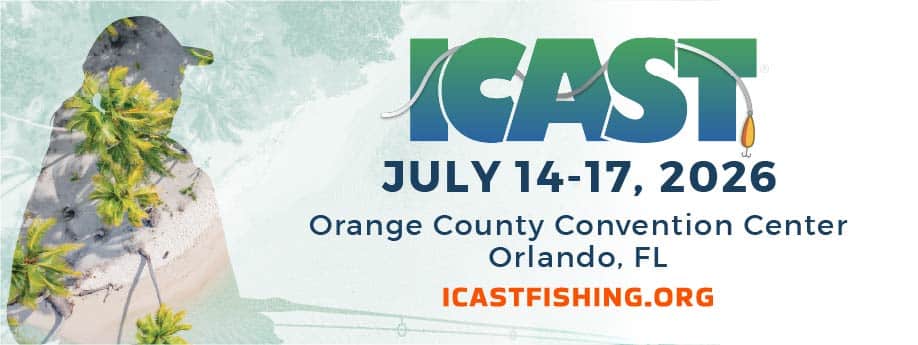
Exhibit space for ICAST 2004 (July 14-16 at the Las Vegas Convention Center) is more than 90 percent booked, more than 10 percent ahead of the same time last year; registration opens at the end of the month ..... State fishing license sales data for 2002 is available from the U.S. Fish and Wildlife Service on http://fa.r9.fws.gov/index.html ..... Please join us in welcoming Jeff Bloem to our staff as Grants Administrator supporting both the Future Fisherman Foundation and the FishAmerica Foundation. Jeff is just in time to help handle scores of inquiries from phys ed teachers across the country about the availability of $200,000 in grants for fishing and boating education programs!
President's Corner
Deferred to Vice President Gordon Robertson
Presidential election years always bring exciting times to Washington. No matter whether the sitting President is seeking re-election or the nation is looking at a slate of new candidates, it's a year of opportunity. This year ASA enters the last session of the 108th Congress with two major goals: to reauthorize and enhance the Sport Fish Restoration Act, or Wallop-Breaux, and to pass the Freedom to Fish Act.
It seems that all good things policy-wise come with an enormous investment of patience and perseverance. A look at significant legislation for the fishing and boating industry, whether related to natural resources or manufacturing issues, indicates that perseverance is indeed a virtue. With reauthorization of the Sport Fish Restoration Act, it's our goal to capture all of the motor boat and small engine fuel tax that anglers and boaters pay. This would add approximately $110 million annually to the fund, equating to at least $1.1 million for each state for fishery management, access to waters, and boating programs.
Finally, the task of assuring that large areas of our coastal waters are not closed must be accomplished. This is simply the biggest challenge in recent decades. Marine closures must not occur without first exhausting all fishery management and gear measures and any closure must not be contemplated without sound science as the underpinning of the decision. As we move forward during this session of Congress, ASA will be working hard to accomplish these two legislative goals. They are not new and their time has come.