





Sportfishing’s Enduring Values Highlighted In Major Outdoor Recreation Report
by Janet Tennyson
PRESS CONFERENCE HIGHLIGHTS
Fishing remains an enormously popular outdoor pastime in America, with broad economic, social, and conservation values, according to a major outdoor recreation report released today by the U.S. Fish and Wildlife Service. By further analyzing fishing data from this report, the American Sportfishing Association has begun to develop a thorough package on sportfishing, with preliminary results on www.asafishing.org and a full report to be available in late October.
"This report confirms once again that fishing is an enduring American tradition for people of all ages and all walks of life," said American Sportfishing Association President and CEO Mike Nussman. "What resonates through all the facts and figures is fishing’s tremendous importance to our way of life and livelihood."
The National Survey of Fishing, Hunting and Wildlife-Associated Recreation, primarily covering participation in 2001, packages economic and demographic data in a variety of comparative formats. The data shows more than 44 million Americans fish, with anglers spending nearly $42 billion on equipment, transportation and lodging, and other expenses associated with their sport. Overall, anglers’ expenditures grew by 33 percent over the last decade.
Taking expenditures and measuring their "ripple effect" on the economy at local, regional, and national levels, the report shows the broad economic impact of sportfishing has grown from $108 billion in 1996 to $116 billion in 2001. This would make the sportfishing industry 32nd on the Fortune 500 list of America’s largest companies, above Target, Sears and Roebuck, and Johnson & Johnson. Sportfishing also supports 1 million jobs, more than those employed by McDonalds, the number 2 company on the Fortune 500 list.
Ultimately, anglers and other sportsmen are a huge funding source for conservation and recreation in this country. Through spending on fishing licenses and special excise taxes on gear and motorboat fuel, hundreds of millions of anglers’ dollars each year are collected or funneled to states for conservation and recreation. Nearly $300 million from these excise taxes alone will be provided to state natural resource agencies next year to restore fisheries and promote fishing.
Other interesting statistics on sportfishing from the National Survey of Fishing, Hunting and Wildlife-Associated Recreation and the American Sportfishing Association’s upcoming report include:
- One in 6 people in the United States fish, making it the fourth most popular sport, more so than golf and soccer combined.
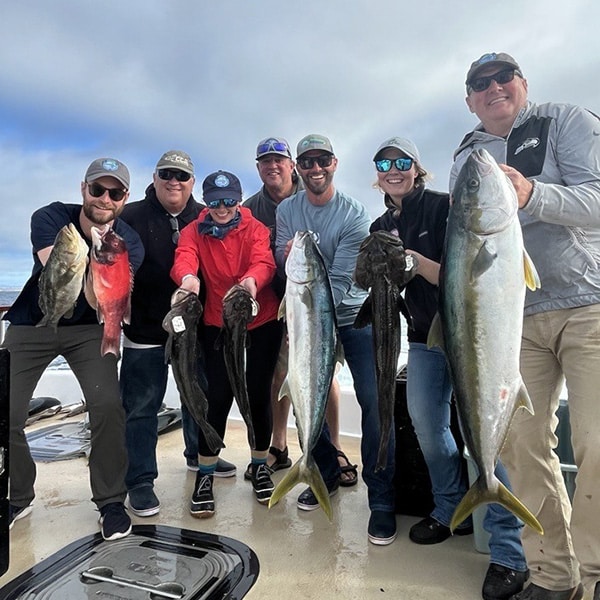
- More than 28 million people fished in freshwater, for a cumulative 467 million days and 365 million trips. More than 9 million people fished in saltwater, for a cumulative 91 million days on 72 million trips. Twelve percent of anglers fly fish, while 7 percent ice fish.
- 27 percent of anglers range between the ages of 35 and 44.
- 40 percent of anglers come from large urban areas.
- More than 90 percent of America’s anglers fish within their home state.
- Each angler spent an average of $1,046 on fishing-related expenses.
- Fishing is most popular in north-central states (Minnesota, Iowa, Missouri, Kansas, Nebraska, and the Dakotas).
- 68 percent of anglers have household incomes over $50,000, with another 15 percent represented within the $20,000-$49,999 income range.
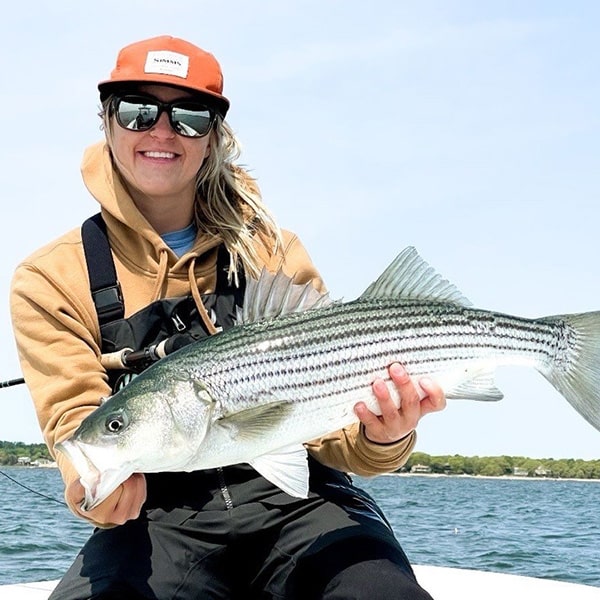
- The most popular freshwater fish are black bass, panfish, trout, and catfish. The most popular saltwater fish are flatfish such as flounder and halibut, red drum, striped bass, and sea trout. The most popular Great Lakes fish are perch, walleye, black bass, and salmon.
- 74 percent of anglers are male, 26 percent female.
- More than 1 million jobs are related to sportfishing, accounting for more than $30 billion in wages.
The American Sportfishing Association is the recreational fishing trade association, with 450 members representing the fishing and boating industry, state and federal natural resource agencies, angler advocacy groups, and outdoor journalists. The American Sportfishing Association initiates and supports efforts to advance healthy fisheries, fishing opportunities, and a profitable sportfishing industry.
Mike Nussman, President and CEO, American Sportfishing Association Congressional Sportsmen’s Foundation Press Conference On New National Survey of Fishing, Hunting & Wildlife-Associated Recreation, Tuesday, October 1, 2002; 10 am, Cannon Caucus Room, 345 Cannon Building, Washington, DC
Thank you to everyone here for joining us in recognizing the tremendous values outdoor recreation has to our society.
The American Sportfishing Association is always interested in the National Survey of Fishing, Hunting & Wildlife-Associated Recreation because we’re dedicated to keeping the great tradition of fishing alive and well in America. It’s remarkable that no matter how much our society changes, fishing endures as a pastime millions of Americans enjoy throughout their lives.
We’re coming out with our own report soon that further analyzes data from the survey. This in-depth analysis shows recreational fishing is big business, generating $116 billion in economic output each year, and supporting more than a million jobs in the United States. The most amazing growth is in anglers’ expenditures, which increased 33 percent over the last decade.
Along with the shooting sports community, our country’s 44 million anglers are a huge source of funding for conservation. Next year, special excise taxes on fishing gear and boat fuel will provide nearly $300 million for state conservation and recreation programs. When you combine that with $500 million that comes from fishing license sales, it’s easy to see how significant anglers are to conservation.
But there’s a lot more value in fishing than just money, and for that we have to look beyond the facts and figures. Fishing is important to our livelihood as well as our American way of life. Like baseball and apple pie, fishing is an enduring American tradition shared by young and old, rich and poor, and crossing all racial and ethnic boundaries. It gives us a wonderful escape from the congestion and contrived pace of our lives to spend time with our families and friends, giving us memories that last a lifetime. No report can show us that, but that’s really what it’s all about.
A lot of people predict that fishing and other outdoor pursuits will fade out of the picture as our population burgeons, open spaces become more scarce, and technology continues to rapidly advance. I’d say these are the very factors that make outdoor recreation even more valuable to our society. Especially during times of uncertainty for our country, like what we’re facing today, I’d like to think our collective efforts to promote these wonderful outdoor traditions are even more meaningful to Americans seeking solitude in the outdoors. Thank you.